WOOLONG

Everyday life beyond Earth.

Money · Transport · Industry · Infrastructure

What makes a spacefaring civilization work?

Buying lunch. Delivering cargo. Making spare parts. Getting home.

Explore the money, industry, and infrastructure behind everyday life beyond Earth. Cowboy Bebop provides the imagined world; these explainers and interactive scenarios explore some of the conditions that could support it.

01 / PayingWoolong & EthereumWhat makes a payment convenient, private, and trustworthy?02 / DeliveringLunar logisticsHow much useful cargo can a launch fleet deliver?03 / ProducingMars industryShould a settlement import goods or make them locally?04 / ReturningOrbital ringCould permanent infrastructure change spacecraft arrivals?

01 / Paying · Technology explainer

Buying lunch should be the easy part.

Spike's smartcard makes paying look ordinary. Behind that experience sit questions of identity, privacy, reliable money, and settlement. Ethereum offers mechanisms to explore those questions; its role in an interplanetary economy remains a proposal.

Explore: the wallet blueprint, bounty dossiers, illustrative currency converter, and payment-channel animation below.


THE

WOOLONG

Ethereum makes the concept of the Woolong, the digital cash used in the Cowboy Bebop universe, into a reality.

Woolong and Ethereum logos

The Woolong Protocol: A Technical Blueprint

The Wallet: From Seed Phrase to Smartcard

Spike doesn't carry a hardware wallet or memorize a 24-word seed phrase. He uses a simple smartcard. To make that a reality, we need technologies like Account Abstraction (ERC-4337), which separates the wallet from the key. This allows for social recovery, paying transaction fees with any token, and eventually, the simple tap-to-pay experience a bounty hunter needs.

The Network: Beyond a Single Rollup

Ethereum is the solar system’s settlement hub, but no single rollup will serve every purpose. For a true "Woolong" to exist, we need seamless interoperability between rollup execution environments that all anchor to Ethereum. Emerging cross-rollup messaging and shared-sequencing protocols aim to let value and state move between rollups as effortlessly as the Bebop jumps between worlds.

The Currency: Stability in a Volatile System

You can't buy noodles if the price of your money swings 10% in an hour. The Woolong is stable. In our world, stablecoins (pegged to assets like the US Dollar) are the solution. They provide the low-volatility medium of exchange needed for a currency to be used for everyday commerce, not just speculation.

The Ghost: The Need for Privacy

Tornado Cash Logo

A bounty hunter's ledger should be private. On a public blockchain, every transaction is visible. For true electronic cash, you need privacy. Protocols like Tornado Cash pioneered onchain transaction mixing to break the link between sender and receiver. This technology is essential for a future where your financial history isn't an open book.


Inter-Solar System Police Bounty Board

Click on a bounty to see the dossier.

Asimov Solensan Wanted Poster
Asimov Solensan Dossier
Faye Valentine Wanted Poster
Faye Valentine Dossier
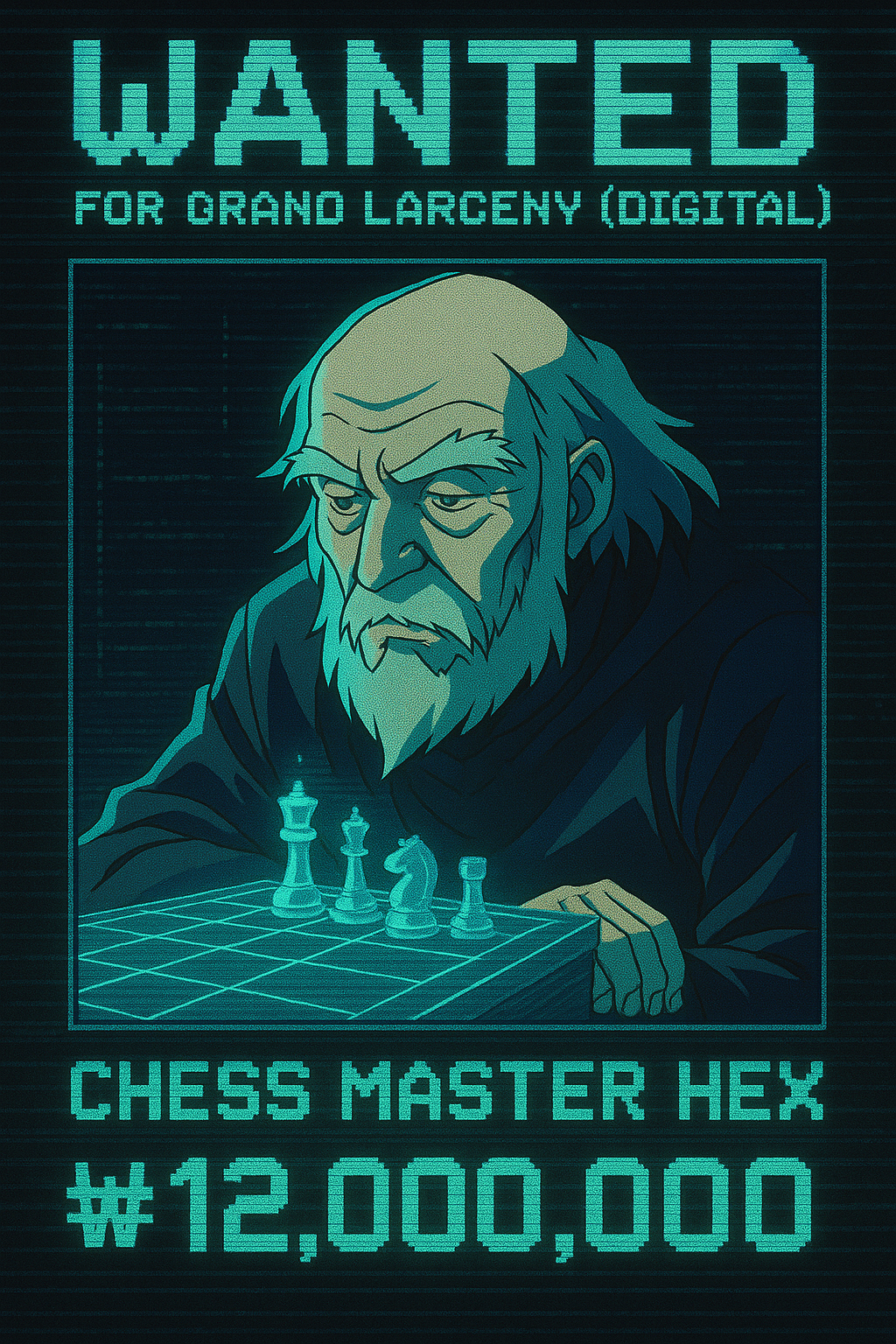
Chess Master Hex Wanted Poster
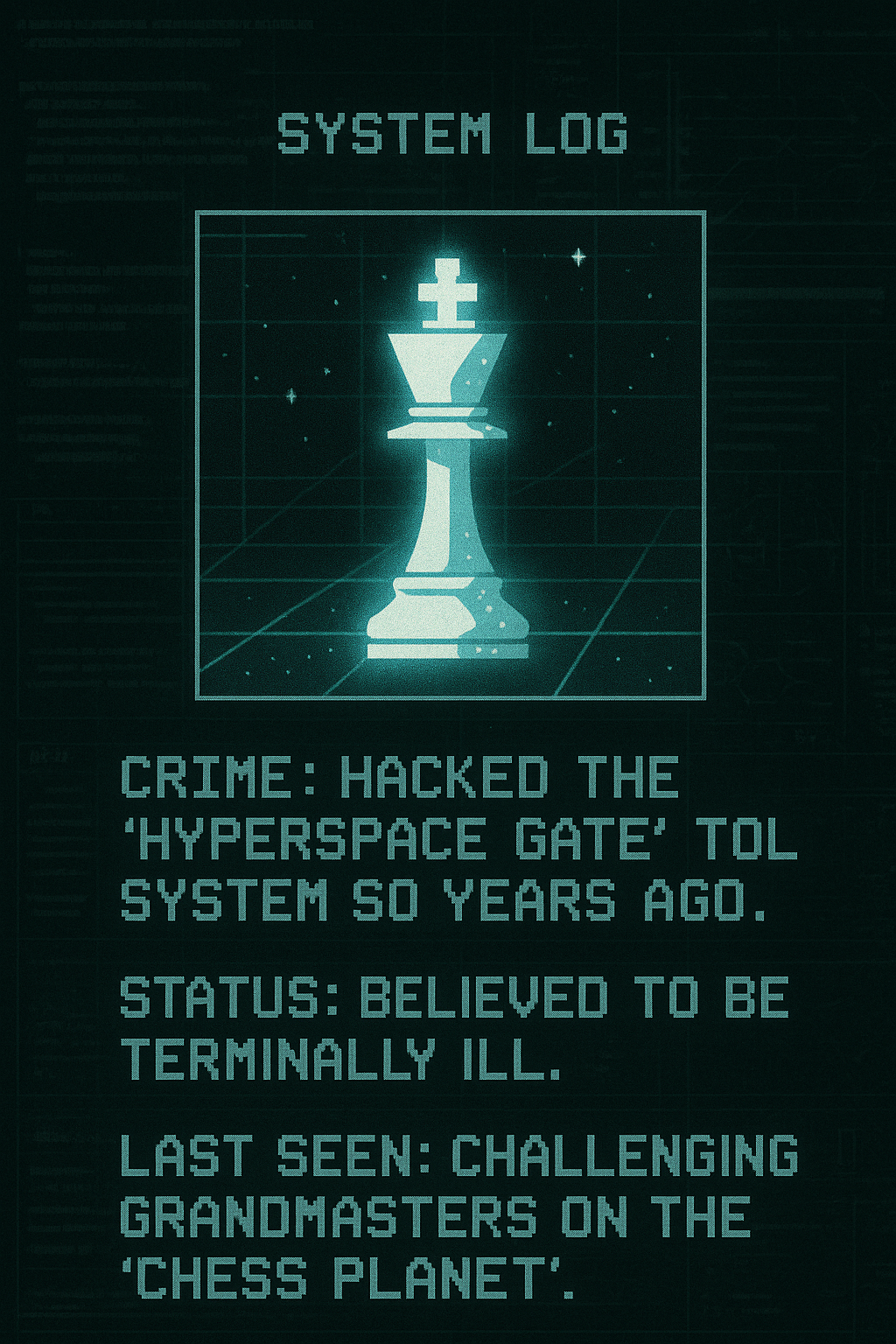
Chess Master Hex Dossier

Woolong Converter

Fetching rates...
...
...

Illustrative assumption: 1 Woolong ≈ 1 JPY. Fetching JPY/USD and ETH/USD rates from Frankfurter and CoinGecko.

Open-source

Nobody owns the Ethereum network or protocol, meaning ether can be used by any party, and could become a universal currency like woolongs.

Instant

For most transactions, you can confirm transfer completion instantly. For larger transactions, waiting 2 minutes will provide a greater than 99.9999% assurance that you've received the funds.

Real scarcity

Despite the Ethereum network being distributed and publicly accessible, and its unit of currency being digital, the number of ether that will be generated is pre-defined, and cannot be changed.

Digital

With ether, like with woolongs, you never need to carry physical money. Everything is digital.

Peer-to-Peer

The Ethereum network has no central authority. Peers on the global network create the payment transfer processor that is Ethereum.

Always-on

With a connection to the internet, you can receive and transfer ether 24 hours a day, 7 days a week, because the peer-to-peer network never sleeps. This makes them digital cash, like woolongs.


Woolongs in Cowboy Bebop

Bounty screen from Waltz for Venus
A woolong bounty on fugitives in 'Waltz for Venus'

Woolong Conversion Rate

Michael Surbrook estimates that one Woolong is worth approximately one real-world Japanese Yen:

A note on money. The standard currency in Cowboy Bebop is the woolong. Its is roughly equal to one present-day Japanese yen. A sample prices: Appledelphis's bounty (fake) -- 50.000000 (i.e. 50) woolongs; 1 watermelon -- 1,000 woolongs; to ship a package from the Venus starport to the desert -- 5,000 woolongs; COD on a package shipment -- 6,300 woolongs; toll for gate passage -- roughly 7,000 woolongs; Whitney's bounty -- 19,800 woolongs; fine/bounty for littering -- 20,000 woolongs; COD for betadeck and tape -- 31,500 woolongs, typical bounty -- 1 million woolongs, Asimov Solensan's bounty -- 2.5 million woolongs; Faye's bounty -- 6 million woolongs; reward for the return of Ein, the stolen data dog -- 8 million woolongs; Chess Master Hex's bounty -- 12 million woolongs; Faye's debt -- 300,028,000 woolongs.

This makes a woolong equivalent to a little bit more than 1¢ USD. One ether, as of December 24th, 2016, is worth $7.35 USD, so given a woolong is worth 1-2 cents, a woolong has a value equivalent to approximately 0.001 - 0.002 ether.

Therefore, a woolong is a good approximation of 1 milliether (also known as a finney, 1 finney = 0.001 ether), and could be used interchangeably with the term, as a unit of ether.

The Woolong Wallet

The Cowboy Bebop episode 'Waltz for Venus' showcases an electronic wallet used to transfer woolongs stored on smart cards. The wallet has a number pad through which the amount of woolongs to be transferred is inputted.

It also has two card reader slots, allowing two woolong cards to be inserted in the wallet, and woolong transferred between them. It's not shown if the woolong wallet also allows authentication of transfers from woolong-holding smartcards, using the input pad to enter a password.

The Woolong wallet from Cowboy Bebop
The woolong wallet is used to transfer woolongs from one smart card to another

The Bounty Hunter's Handshake: State Channels

The instant, private transactions Spike performs aren't just science fiction. The core mechanics can be achieved today with a technology known as state channels. It's a private ledger between two parties, secured by the main blockchain. While state channels have historically relied on project-specific protocols, the community is moving toward standardization with proposal like ERC-7824. This draft proposal aims to create a common framework for state channels, making them a more accessible and integral part of Ethereum's modular scaling strategy.


PHASE 1: OPEN CHANNEL (ON-CHAIN)
PHASE 2: TRANSACT (OFF-CHAIN)
PHASE 3: CLOSE CHANNEL (ON-CHAIN)
MAIN BLOCKCHAIN
SPIKE
STATE CHANNEL CONTRACT
CLIENT
PRIVATE OFF-CHAIN CHANNEL
SPIKE
CLIENT

Instant Verification & No Wasted Funds

Before you transfer a multi-million Woolong bounty, you need to know it's going to the right person. With a state channel, you can send 1 Woolong as a test. Your counterparty sees it instantly, confirming the connection. No more sending a fortune to the wrong address because your fingers slipped.

Milestone Payments & Streaming Money

Many sci-fi stories show money moving incrementally — think of a progress bar filling from 0% to 100%. State channels make this common trope a practical reality. You can 'stream' payments second-by-second for an ongoing service or release funds precisely as job milestones are met, all without paying gas for each tiny update. It allows for a true cash-like flow, something even the Bebop's tech didn't show.

Spike transferring woolongs to Faye using his electronic wallet in 'Waltz for Venus'

Trade makes more possible. Dependence changes the decision.

More delivery capacity changes what a settlement can obtain. Local industry changes what it must obtain. Payment systems organize exchange, while permanent infrastructure could change the cost of repeated journeys.

A settlement might choose local production for reliability even when imports are cheaper. A convenient payment still needs dependable settlement. A braking ring might recover energy while demanding an enormous construction effort. Each section lets you explore one part of that picture; the tools use separate assumptions and are not a combined simulation.

What would have to be true?

A familiar payment experience needs secure wallets, usable privacy, dependable settlement, and clear rules for disputes. Account abstraction can support custom authorization and sponsored fees; the features depend on the wallet and service implementation. ERC-4337 specification.

State channels require committed funds and participating counterparties. Opening, closing, and disputes can involve onchain transactions, even when intermediate transfers avoid per-payment gas fees. State-channel documentation.

Earth–Mars communication can take over 20 minutes one way. Local payments and delayed interplanetary settlement are therefore useful design questions; rollups and channels do not remove light-speed delay. NASA communications analysis.

Continue exploring: payments organize exchange, but goods still have to arrive. Explore lunar cargo delivery →